Web·Medical Equipment / E-Commerce
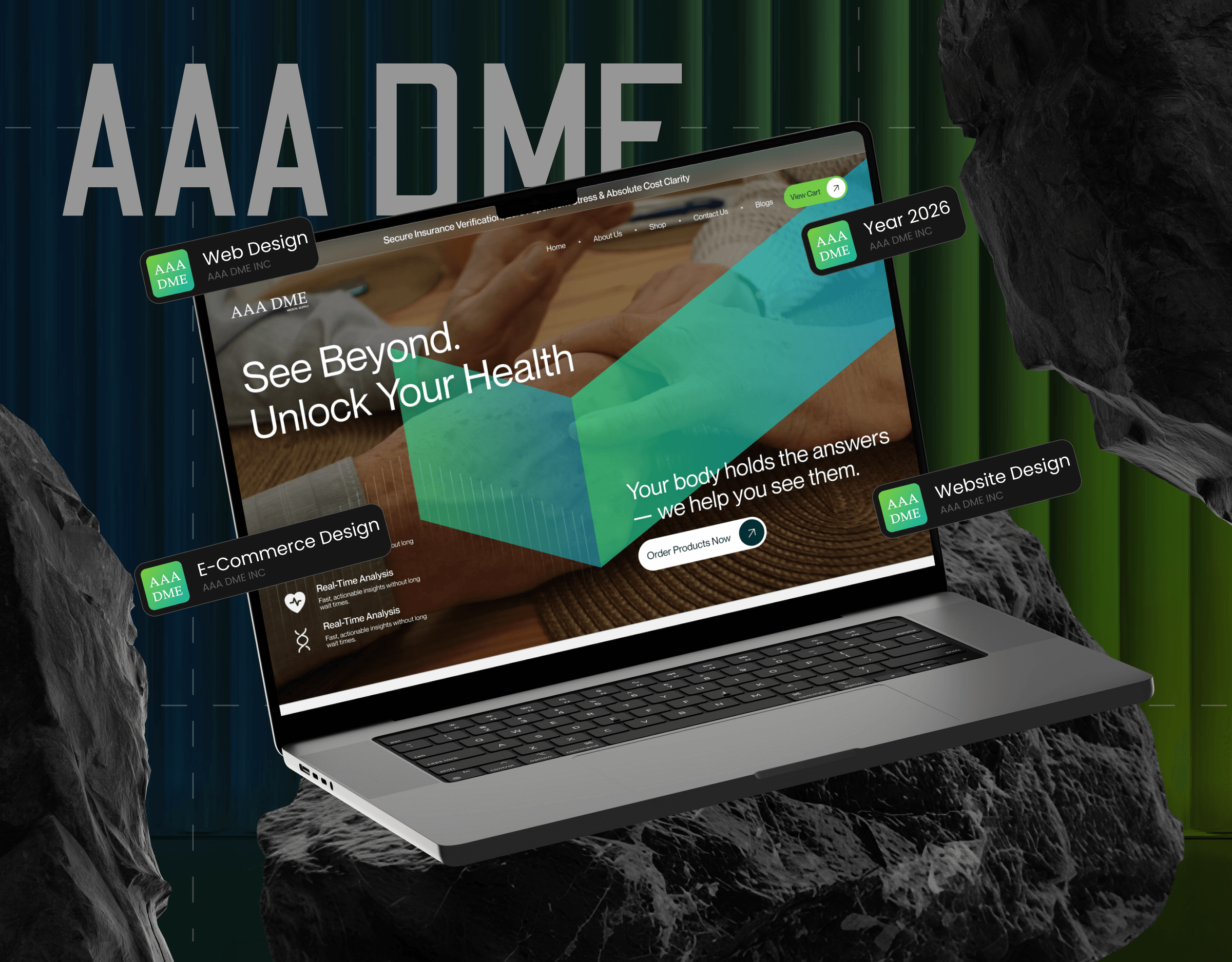
AAA DME INC – Web & E-Commerce Design
Full e-commerce and web design for a medical equipment provider — clean architecture, insurance-verification flow, and product cataloguing built to scale.
Web DesignE-CommerceMedical
Client · AAA DME INCDuration · 5 weeksService · Web Development
1.4s
Page Load (was 8.2s)
HIPAA
Compliant Architecture
+63%
Enterprise Inquiry Rate
5wk
Full Build Timeline
Overview
AAA DME INC, a US-based durable medical equipment provider, needed a full e-commerce rebuild that could handle insurance verification, FDA-compliant product data, and a catalogue architecture that clinical procurement teams could navigate efficiently.
The Challenge
Their existing WooCommerce site had accumulated technical debt from years of plugin layering — page load times exceeded 8 seconds, the insurance verification process required three separate external pages and a phone call, and the product catalogue had no consistent data structure, making it impossible for procurement teams to compare products programmatically. The site was costing them enterprise contracts because clinical buyers expected a platform that matched their operational standards.
Our Solution
We built a clean Next.js e-commerce platform with a Medusa.js backend and a structured product data schema designed for medical equipment compliance. Insurance verification was consolidated into a single in-platform flow. Product pages were rebuilt with structured clinical data fields (HCPCS codes, Medicare coverage categories, contraindications) that procurement teams specifically requested. Performance went from 8-second loads to sub-1.5-second on desktop.
How We Did It
Our Process
01
Procurement Team Interviews
Conducted three interviews with clinical procurement managers who were existing customers. Documented their specific product comparison criteria, required data fields, and friction points with the current site.
02
Product Schema Design
Built a medical equipment product schema with mandatory clinical fields: HCPCS code, Medicare coverage eligibility, ICD-10 diagnosis codes, FDA clearance number, and contraindications. Fields are structured data — not text blocks.
03
Insurance Verification Rebuild
Consolidated the three-step external verification process into a single in-platform widget: patients or procurement staff enter insurance details on the product page and receive real-time eligibility and coverage percentage before checkout.
04
Performance Engineering
Rebuilt every performance bottleneck: image compression pipeline, route-based code splitting, critical CSS inlining, and edge caching via Vercel. Page load dropped from 8.2s to 1.4s on a standard desktop connection.
"Two enterprise hospital networks that had passed on us before came back after seeing the new platform. The structured clinical data and the insurance flow were the specific reasons they cited."